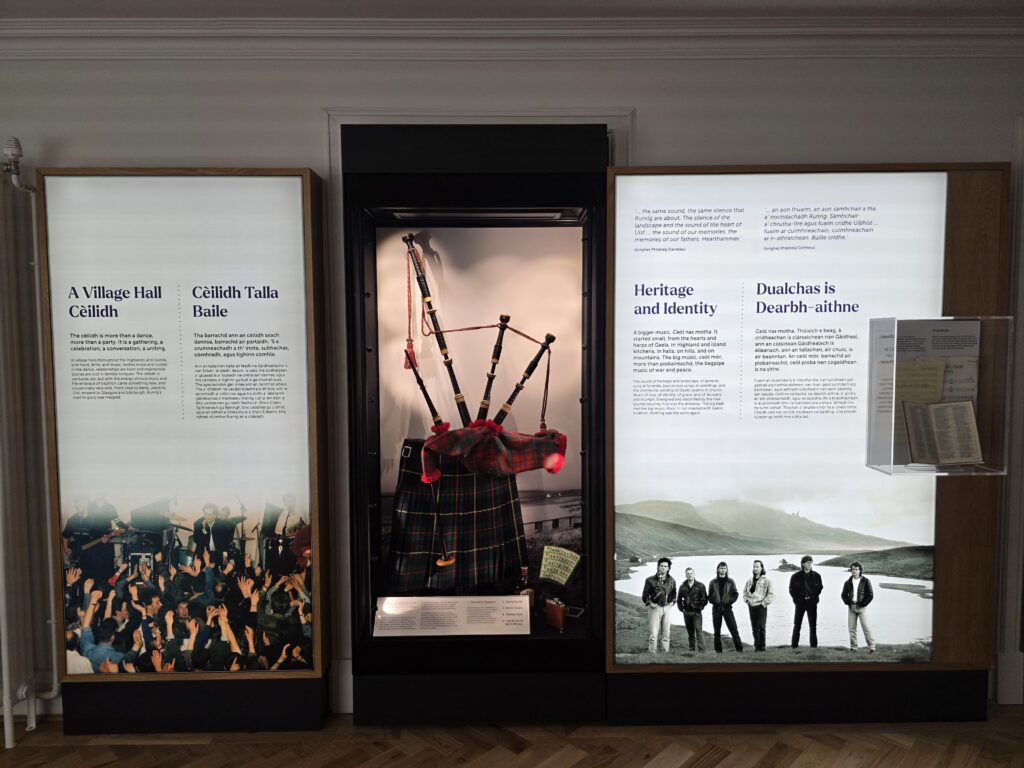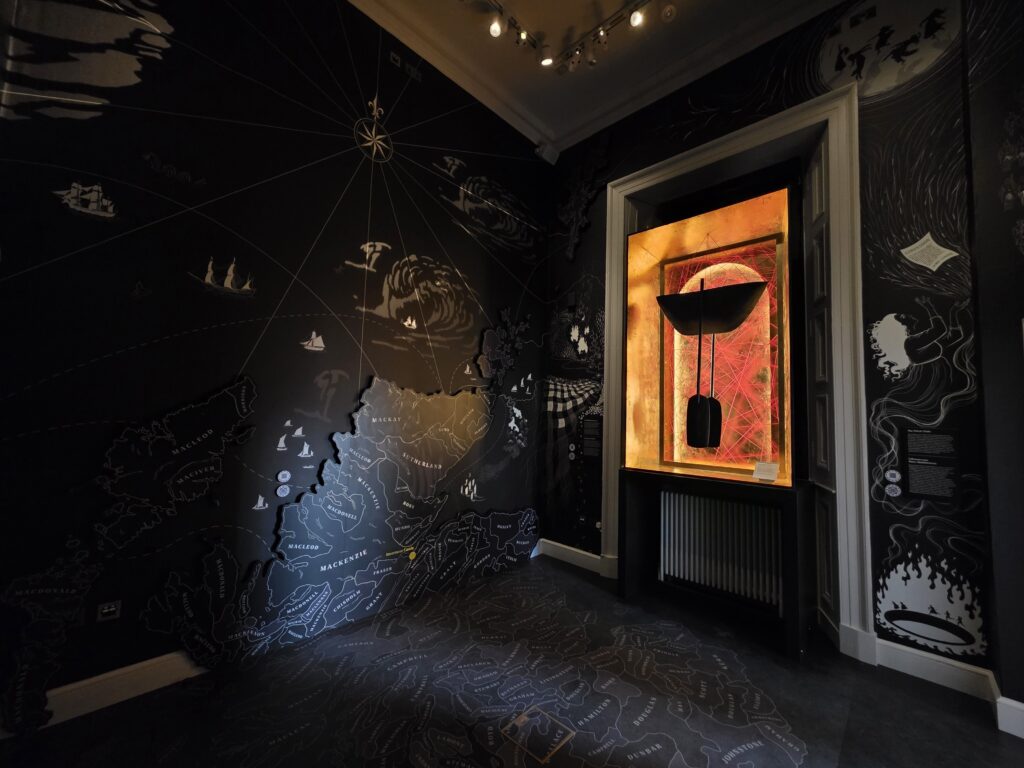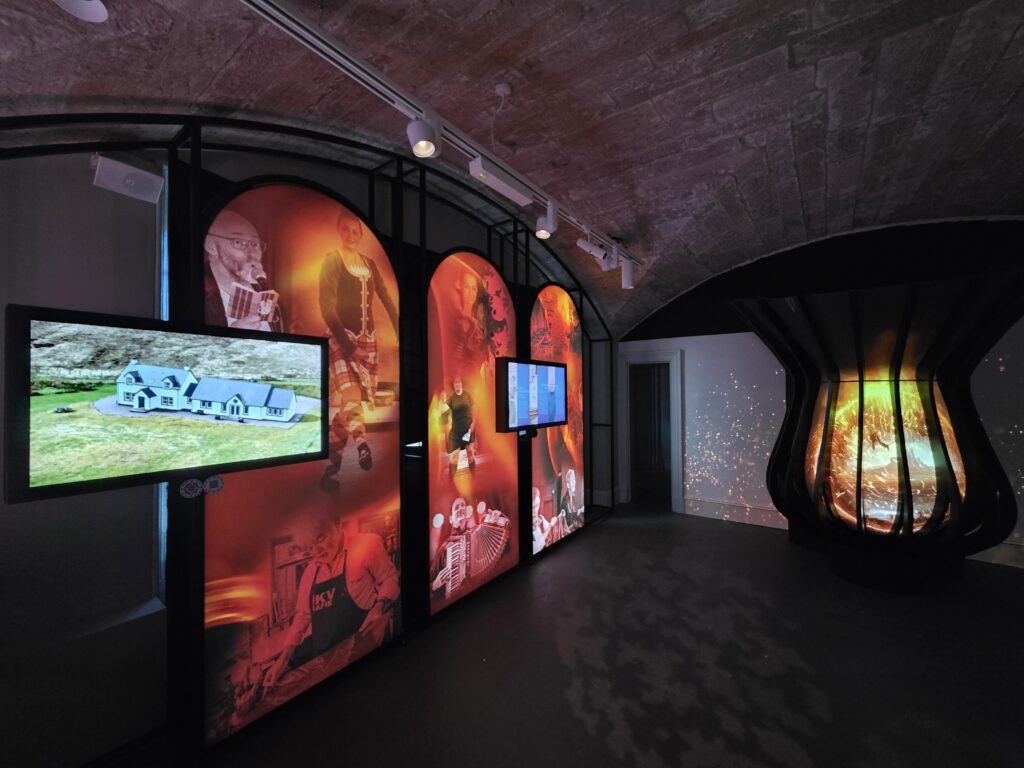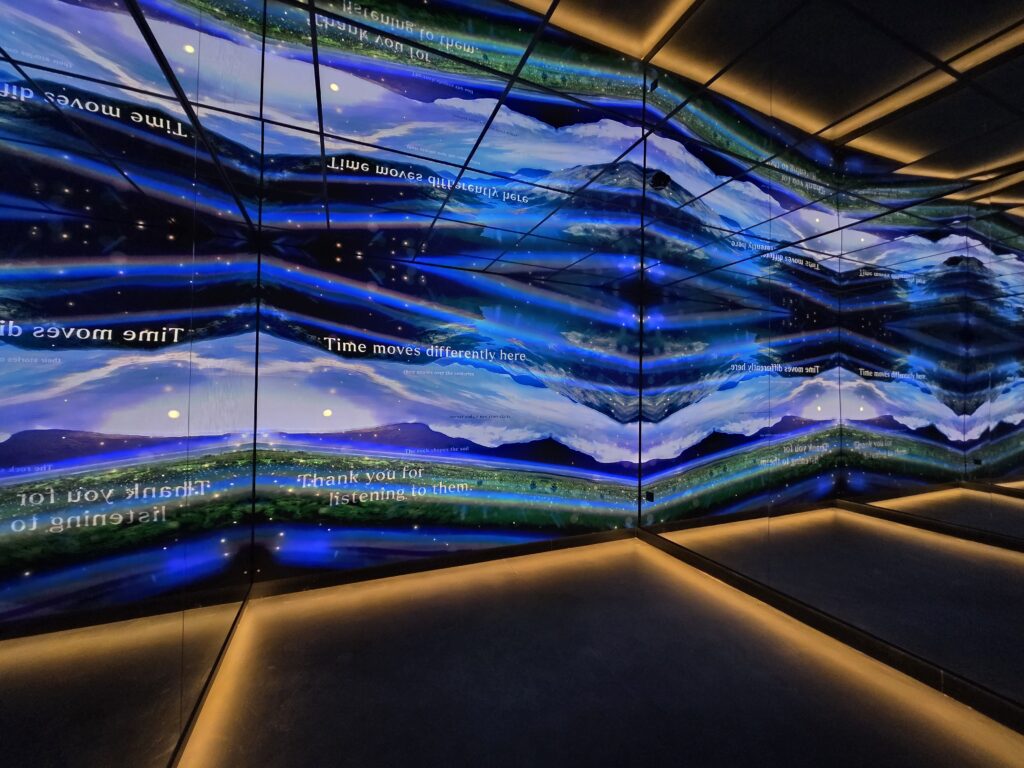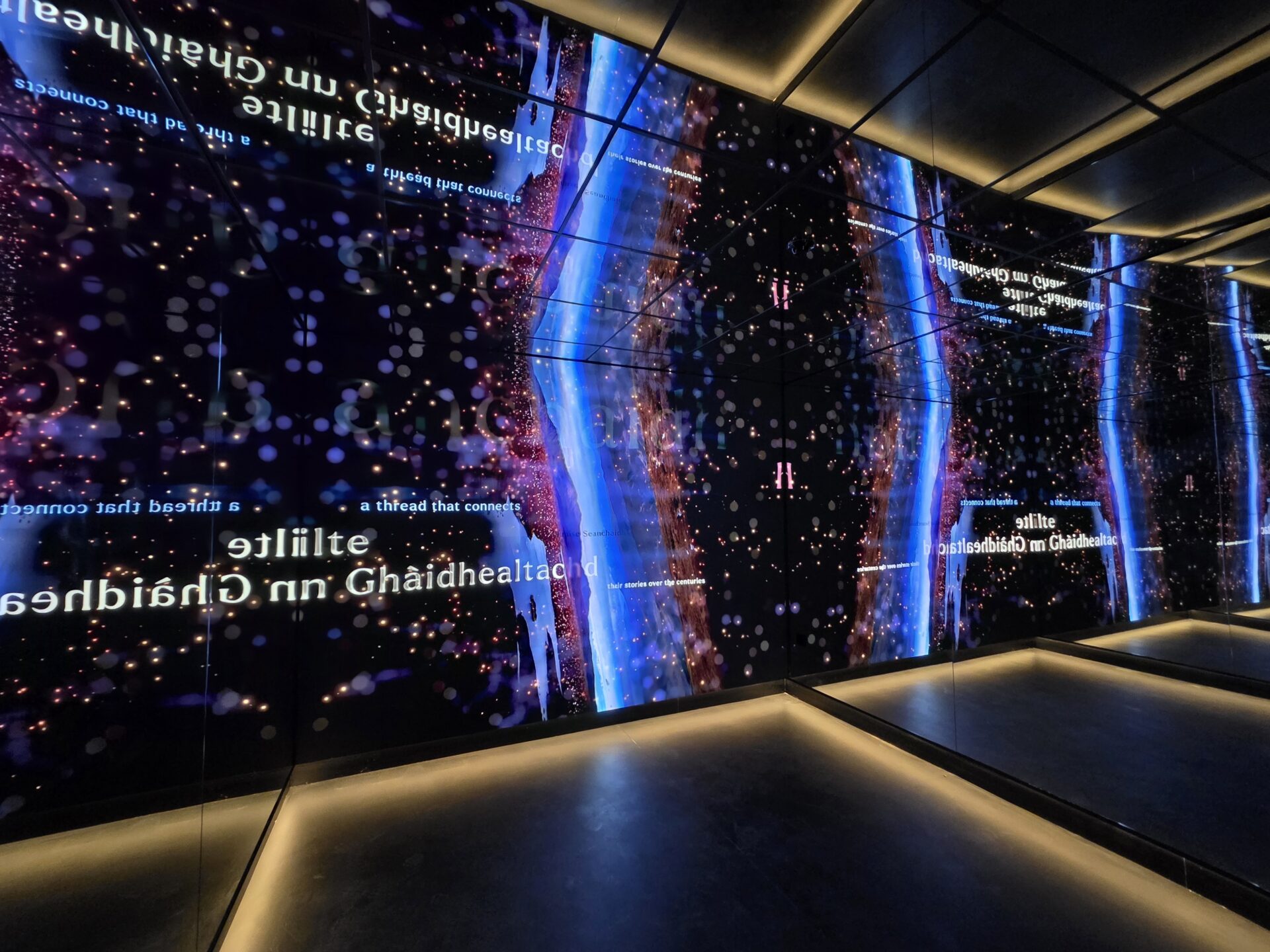
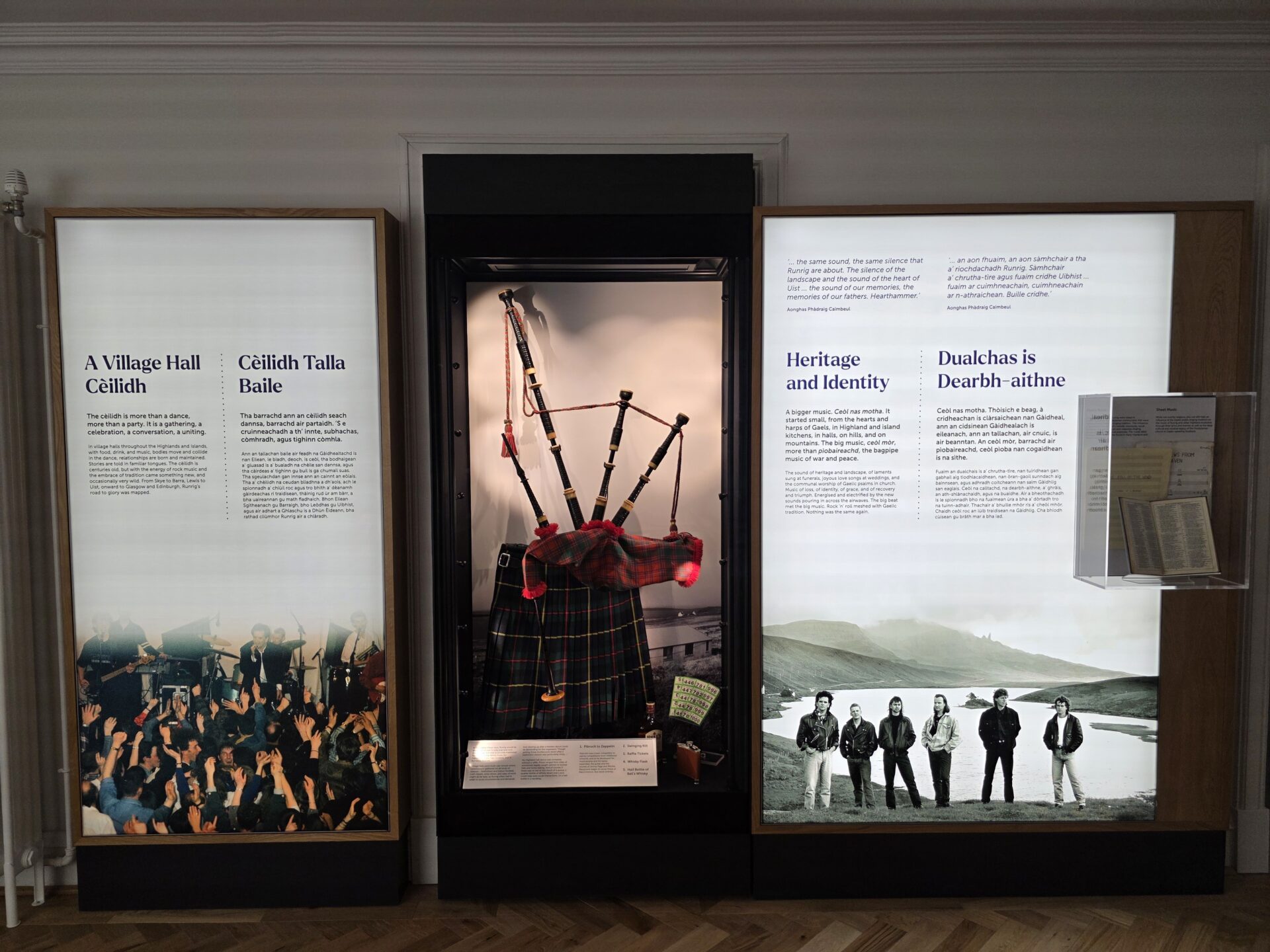
The language isn’t treated in isolation – the Gaelic communities are part of the story itself, and their voices are fed directly into the narratives visitors encounter throughout the experience. That thinking shaped the entire approach, with stories selected to include Gaelic perspectives from the outset, not adapted later. It’s also reflected in how the content was developed - scripts for the main shows were written in English and Gaelic side by side, ensuring both languages work together seamlessly rather than one sitting behind the other.
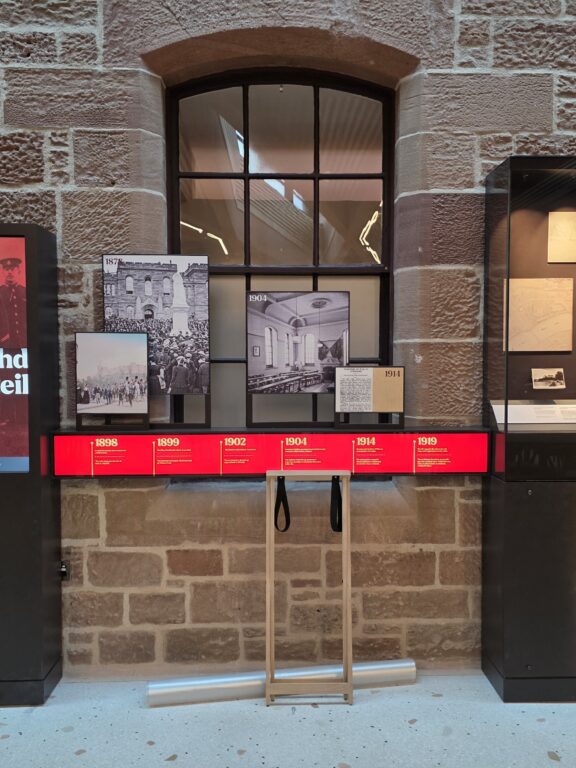
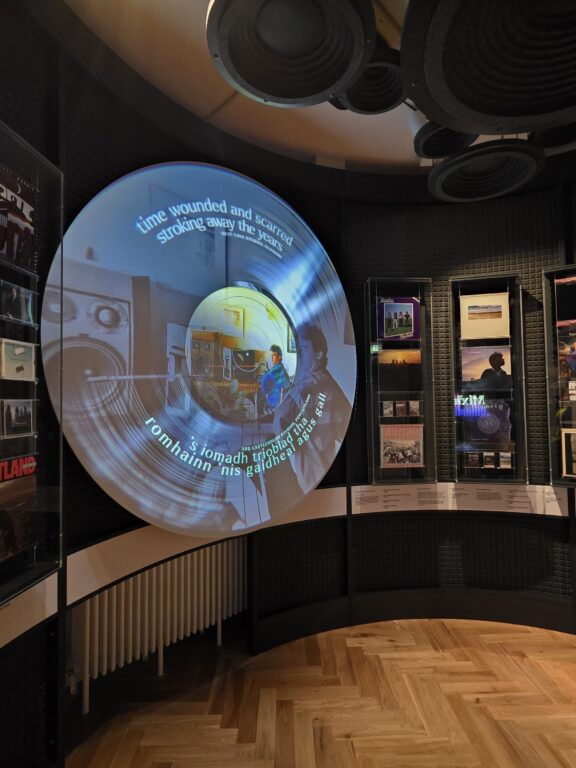
The role of the Seanchaidh is central to this as a traditional storyteller. They provide continuity across the experience, guiding visitors through different themes while grounding the narrative in something recognisable and culturally specific. From a design perspective, this creates a very different kind of environment - instead of reading panels, visitors listen, and instead of scanning for key facts, they engage with voices, accents and rhythm. It also slows the experience down in the right places and creates a level of connection that’s difficult to achieve through text alone.
What’s particularly striking is that this approach doesn’t feel like a feature because it doesn’t stand apart from the rest of the experience or draw attention to itself unnecessarily. When language, culture and community are treated as part of the structure rather than an add-on, they become something visitors can naturally connect with, and shapes how the story is told.