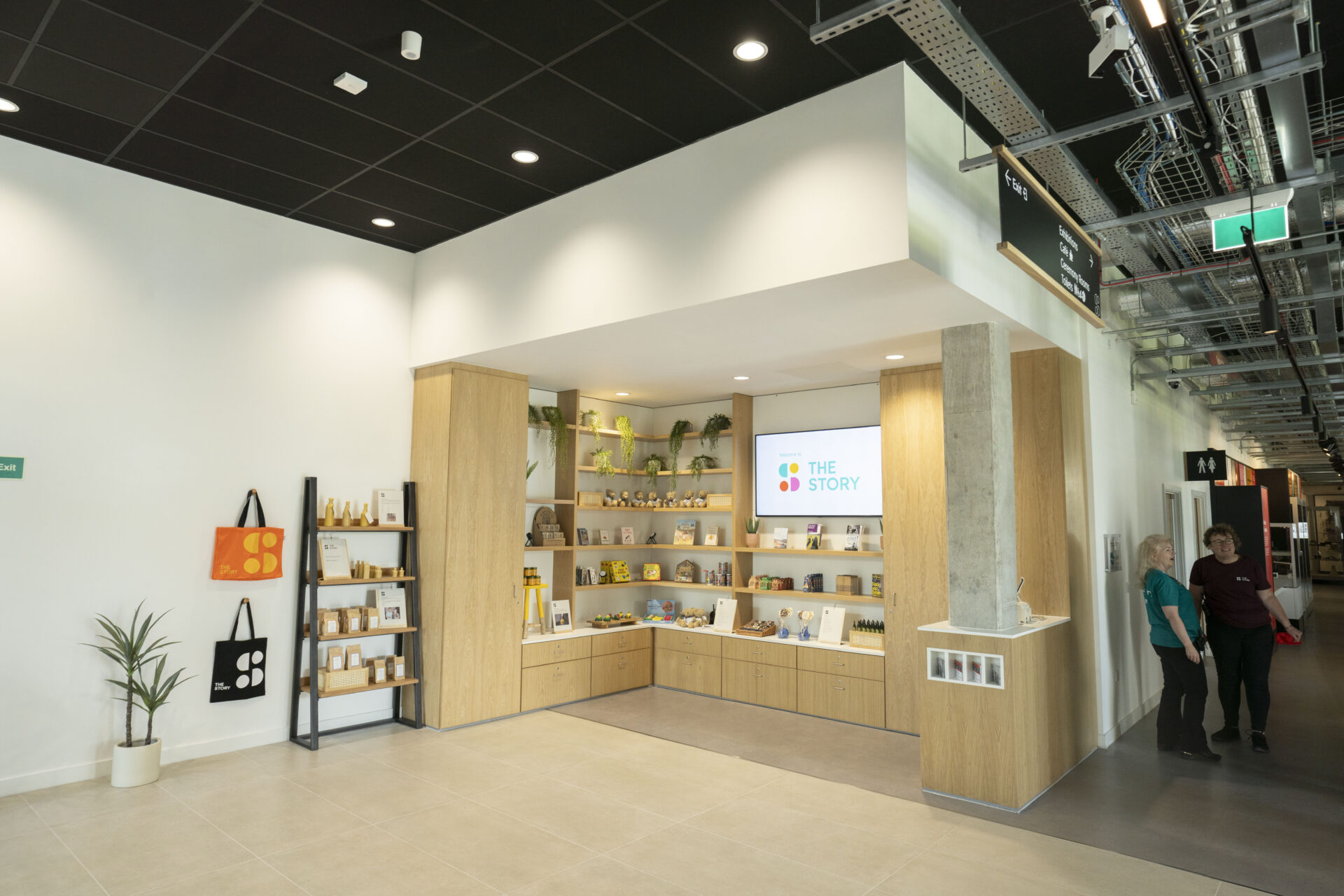
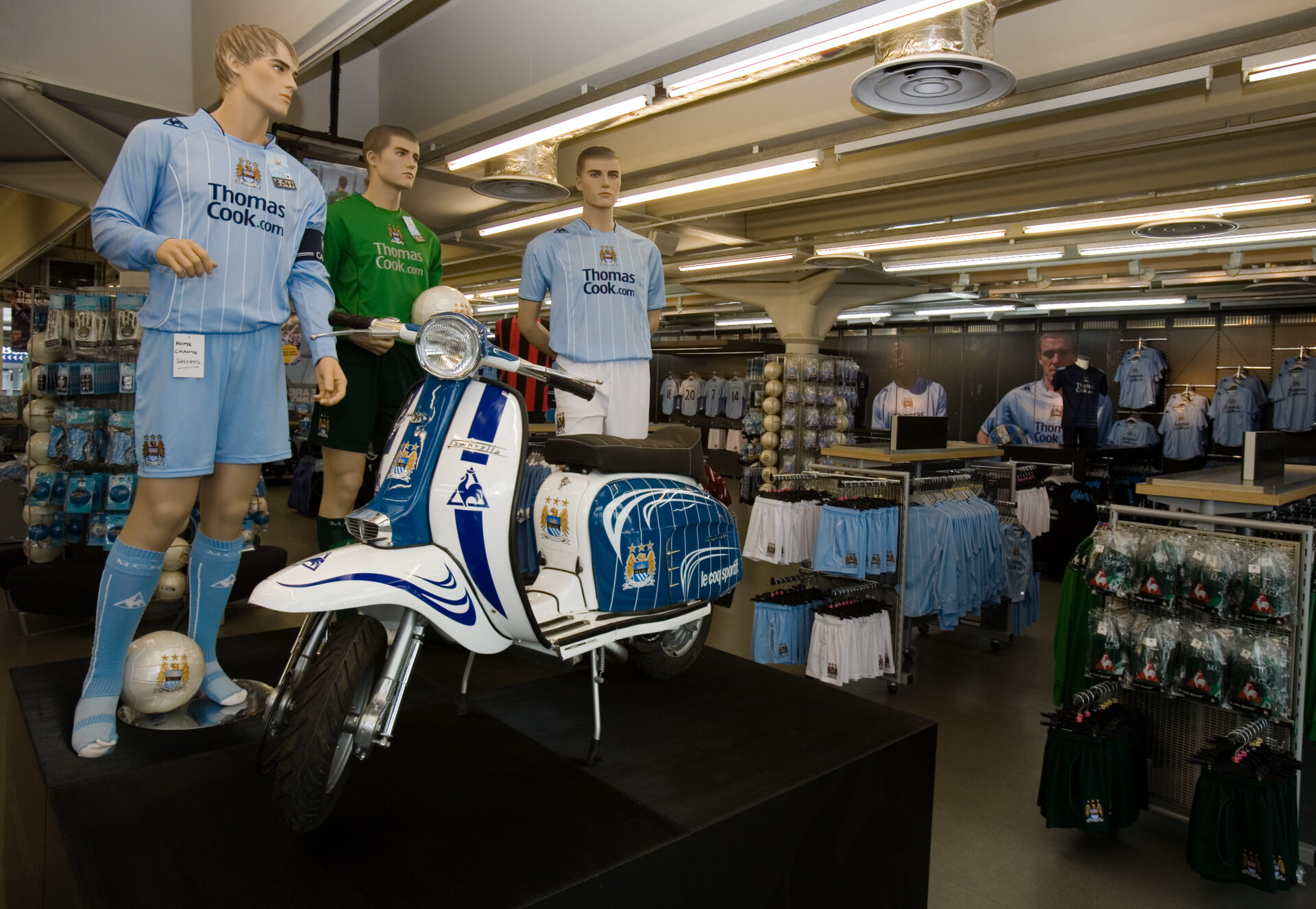
Retail should never be an afterthought, because it forms part of the visitor journey from the moment someone steps inside the building. When a shop or food and beverage offer is planned properly at concept stage, it extends the story rather than interrupting it, encouraging visitors to linger longer, reinforcing the identity of the attraction and supporting long-term sustainability without ever feeling overly commercial or forced.
Placement plays a crucial role in making this work. What visitors can see from the retail space matters just as much as how they feel when they arrive at the end of the experience, because the emotional state of a visitor as they approach the exit is part of the overall journey. If that journey ends abruptly in a room filled with unrelated merchandise, something has been lost along the way. But when the products feel like a natural continuation of what visitors have just discovered, the story doesn’t simply stop at the final gallery – it carries on beyond the building.
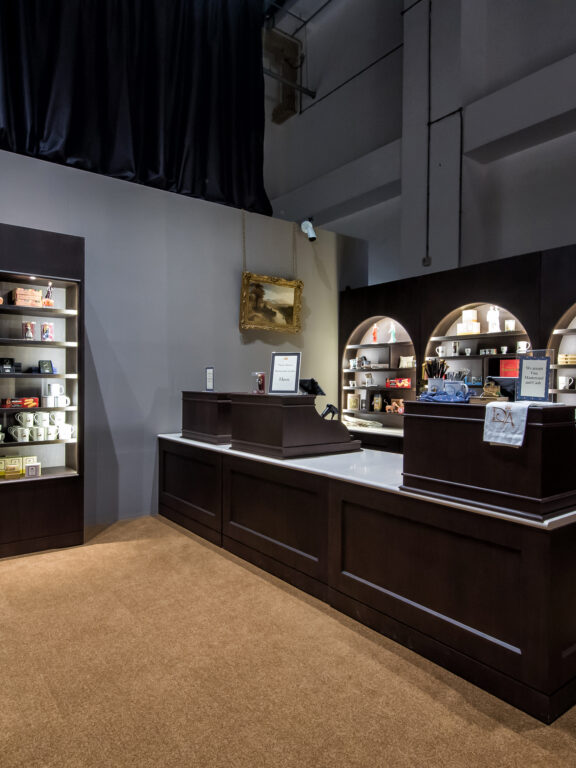
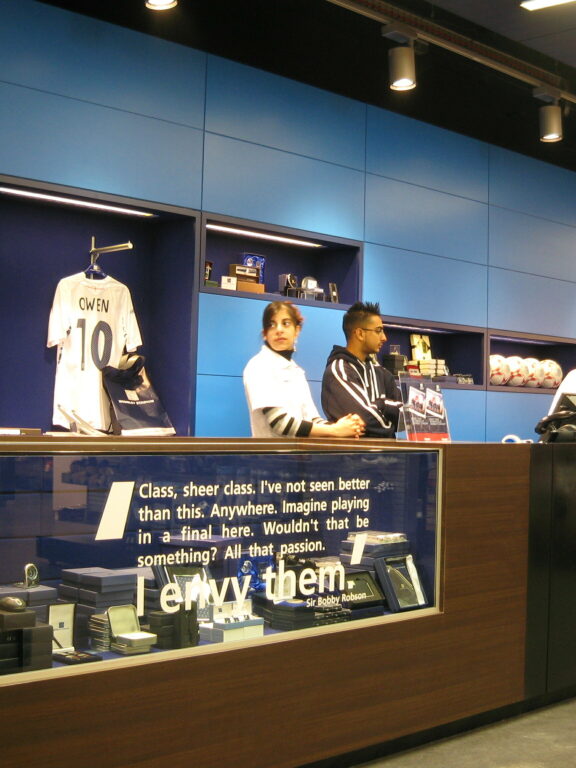
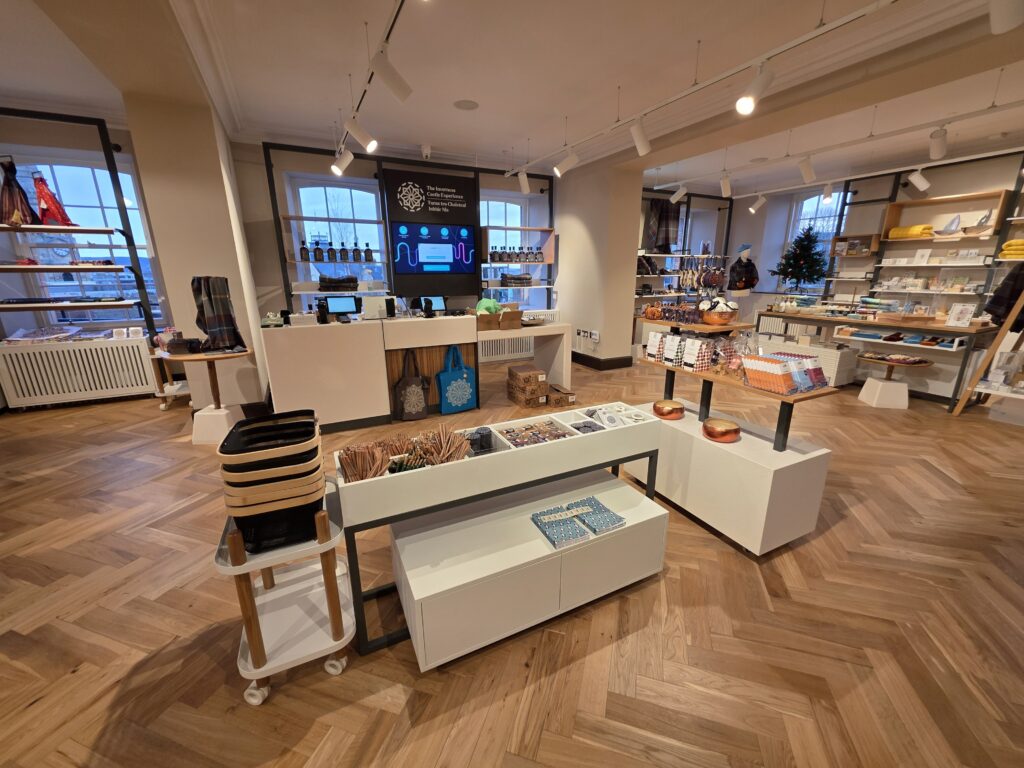
Our recent work at The Inverness Castle Experience shows how this thinking can come together in practice. The project brings Highland heritage, culture and craft together within a landmark setting, where whisky isn’t simply a product on a shelf but part of the narrative of place itself. Designing the environment so that retail aligns with that identity wasn’t about adding a shop at the end of the route, it was about recognising that the products visitors encounter can reinforce the cultural story they’ve just experienced.
At Inverness, the merchandise has been inspired directly by the experience at every stage. Cuillin the dog, created as the children’s trail guide within the experience, has its own product line in the retail space. The rose window within the castle has inspired the Inverness Castle gin, whisky, puzzles and a textile range, while the Tartan Room connects to the Inverness Castle tartan created with Prickly Thistle, again with its own distinctive product line. Illustrations by Ian Westacott, created for the Forest Room within the visitor experience, are also available in the retail offer, allowing visitors to take home a piece of the visual storytelling they’ve just encountered.
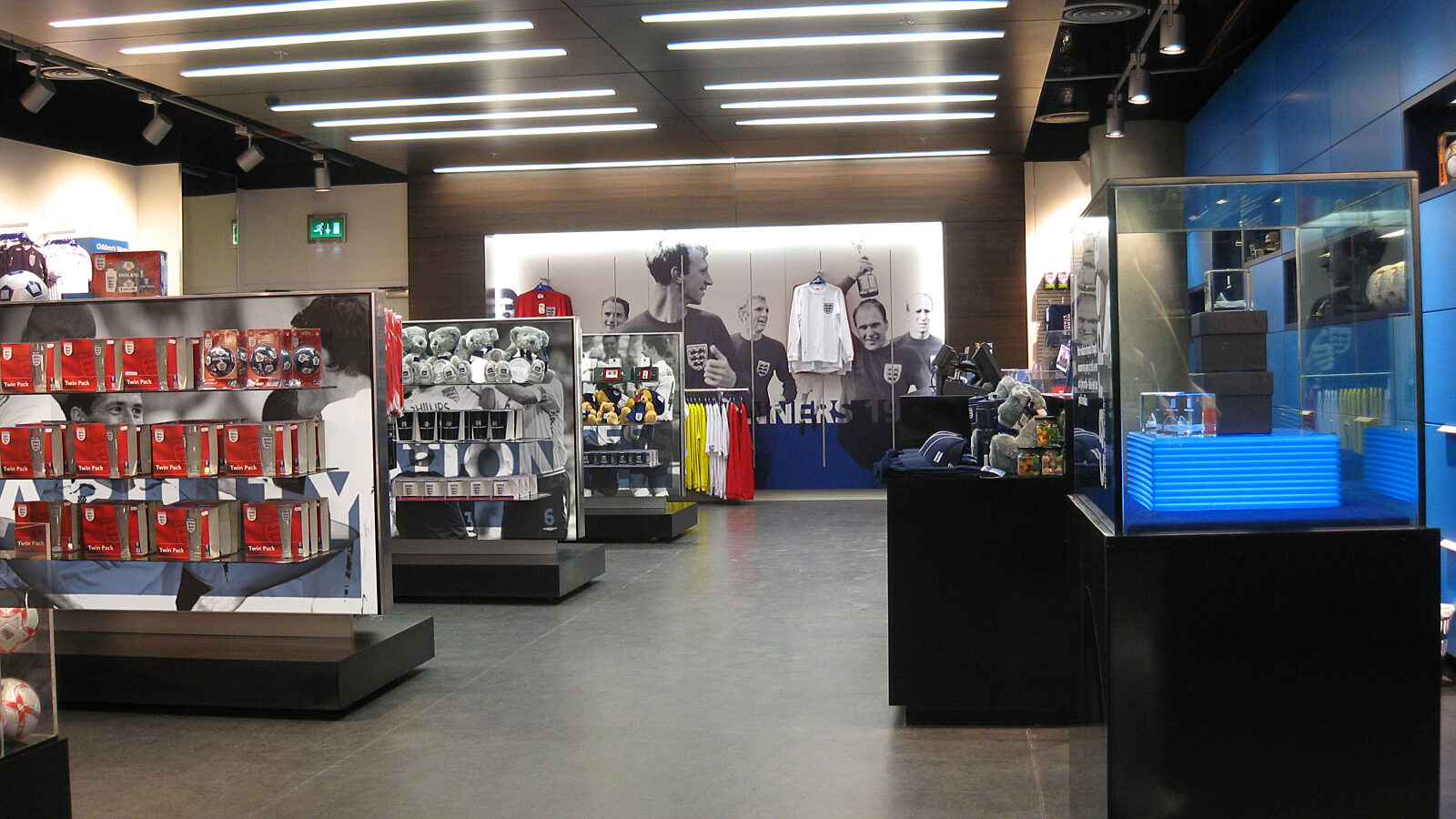
Too often, retail design is approached as a separate discipline or, worse still, left until the final stages of a project. The outcome is a space that feels commercially disconnected from the galleries, even though visitor attractions operate in a very real world of operational pressures, staffing realities and financial responsibility. Income generated through retail and hospitality supports programming, conservation and future development, so ignoring this at concept stage doesn’t make a project purer – it simply makes it less sustainable.
When retail placement and narrative are considered together, the entire experience begins to work harder. The exit route feels intentional rather than accidental, the products feel curated rather than opportunistic and visitors leave with something that genuinely connects them to what they’ve just experienced. In that moment the story isn’t finished – it simply continues in a different form.
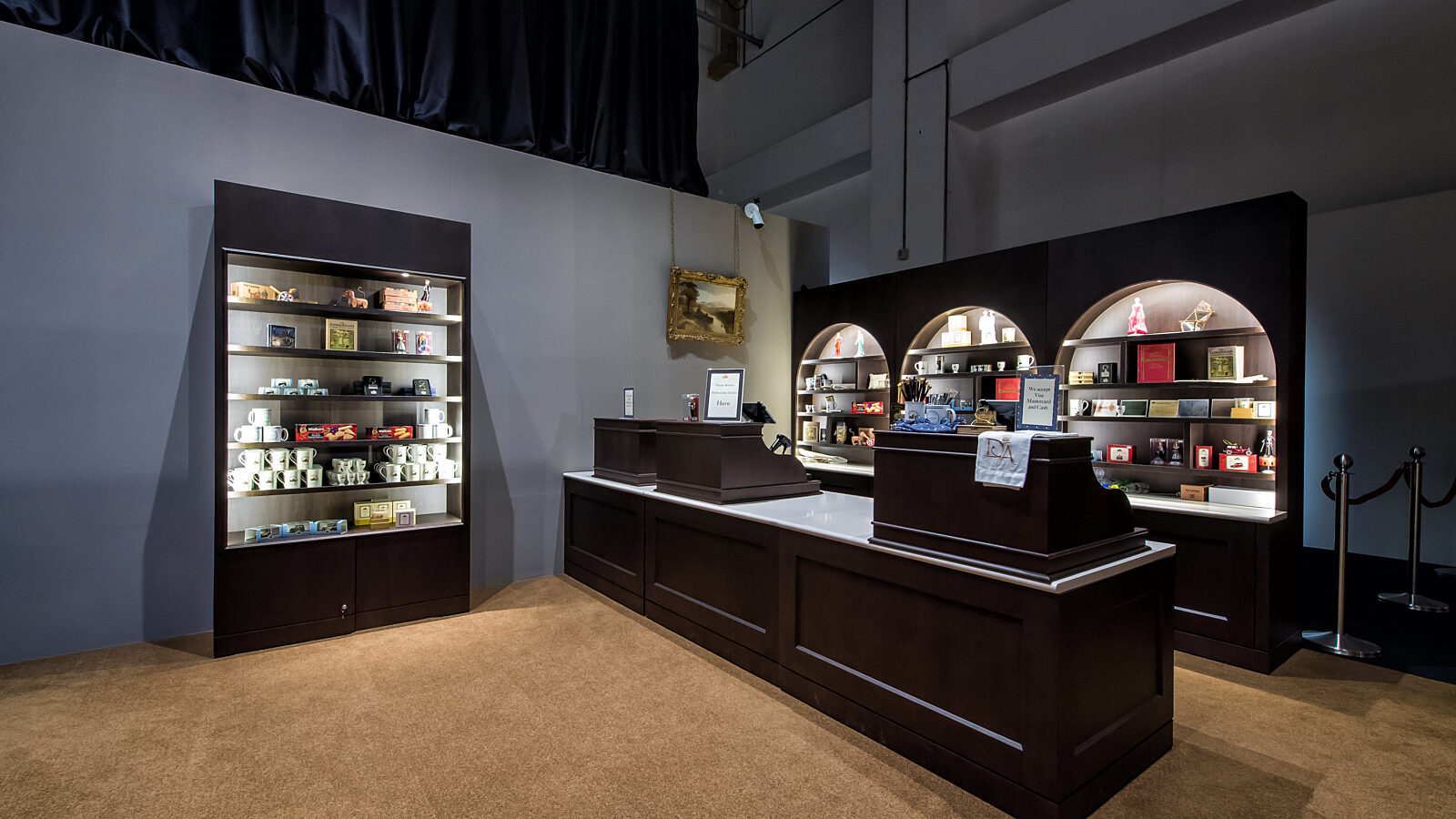
At Mather & Co, this thinking is embedded in the way projects are approached from the outset. Retail, hospitality and visitor flow aren’t treated as separate commercial elements that appear later in the process; they’re considered as part of the overall narrative design from the beginning. By bringing these elements into early concept discussions, the team can ensure that storytelling, visitor behaviour and operational realities all work together to create a cohesive and commercially sustainable experience.
The result is visitor attractions where the final moments of the journey feel just as carefully designed as the first, where retail supports the story rather than distracting from it and where visitors leave with a meaningful reminder of what they’ve just experienced.